Sunday, December 30, 2018

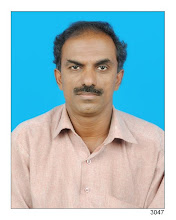
MRINAL SEN

MRINAL SEN(14 May 1923, 30 December 2018)

Noted Bengali filmmaker Mrinal Sen passed away on Sunday,30, Dec 2018 at 10:30 am. He was 95. Sen was one of the forerunners of parallel cinema in India. Along with his contemporaries Satyajit Ray and Riwik Ghatak, Sen changed the face of Bengali film in a big way.

Mrinal Sen made his directorial debut with the 1955 movie Raat Bhore, and went on to helm films like Bhuvan Shome, Chorus, Calcutta 71, Kharij, Mrigaya and Akaler Sandhane among others. Sen had received 18 National Awards.

Mrinal Sen was born on May 14, 1923, in the town of Faridpur, now in Bangladesh. After finishing his high school there, he left home to come to Calcutta for studying physics. During his student days, he got involved with the cultural wing of the Communist party. Though he never became a member of the party, his association with the Indian Peoples Theatre Association brought him close to a number of like-minded cultural people.

His interest in films started after he stumbled upon a book on film aesthetics. However his interest remained mostly intellectual, and he was forced to take up a job of a medical representative, which took him away from Calcutta. This did not last very long, and he came back to the city and eventually took a job of an audio technician in a Calcutta film studio, which was the beginning of his film carrier.

Mrinal Sen made his first feature film in 1953, which he soon tried to forget. His next film, Neel Akasher Nichey (Under the Blue Sky), earned him local recognition, while his third film, Baishey Shravan (Wedding Day) was his first film that gave him international exposure.

After making five more films, he made a film with a shoe-string budget provided by the government of India. This film, Bhuvan Shome (Mr. Shome), finally launched him as a major filmmaker, both nationally and internationally. Bhuvan Shome also initiated the “New Cinema” film movement in India.

His next few films were overtly political, and earned him the reputation as a Marxist artist. This was also the time of large-scale political unrest throughout India, particularly in and around Calcutta. This phase was immediately followed by a series of films where he shifted his focus, and instead of looking for enemies outside, he looked for the enemy within his own middle-class society. This was arguably his most creative phase and won him a large number of international awards.

Mrinal Sen never stopped experimenting with his medium. In his later films he tried to move away from the narrative structure and worked with very thin story lines. After a long gap of eight years, at the age of eighty, he made his latest film, Aamar Bhuban, in 2003.

During his career, Mrinal Sen’s film have received awards from almost all major film festivals, including Cannes, Berlin, Venice, Moscow, Karlovy Vary, Montreal, Chicago, and Cairo. Retrospectives of his films have been shown in almost all major cities of the world.

Apart from his films, he has also received a number of personal honors.  He received the Padma Bhushan, and in 2005 he was awarded the Dadasaheb Phalke Award, the highest honor given to an Indian filmmaker, by the Government of India. He was also an honorary Member of the Indian Parliament from 1998 to 2003.

The French government awarded him the Commandeur de l'ordre des Arts et letters (Commander of the Order of Arts and Letters), the highest honor conferred by the country.

In 2001 The Russian government honored him with the Order of Friendship. He has also received a number of honorary Doctorate degrees from various universities.

Mrinal Sen was the president of the International Federation of the Film Societies. He also served as member of International Jury at various film festivals, including Cannes, Venice, Berlin, Moscow, Karlovy vary, Tokyo, Tehran, Mannheim, Nyon, Chicago, Ghent, Tunis, and Oberhausen.

In 2004 Mrinal Sen completed his autobiographical book, Always Being Born. In 2008 Mrinal Sen was awarded Lifetime Achievement awards by Osian's-Cinefan Festival and by the International Film Festival in India. In 2009 the International Film Festival of Kerala awarded their first Lifetime Achievement Award to him. 

Deep Condolences.

Monday, August 13, 2018

VS Naipaul

VS Naipaul (17 August 1932 - 11 August 2018)


Vidiadhar Surajprasad Naipaul who passed away at age of 85 on Saturday, 11 August 2018 occupied a rather curious place. Never one to mince words, Naipaul had often been scathing not only against his peers but also against the place he belonged to.

V.S. Naipaul, the Trinidad-born Nobel laureate whose precise and lyrical writing in such novels as A Bend in the River and A House for Mr. Biswas and brittle, misanthropic personality made him one of the world’s most admired and contentious writers
Naipual won the Booker Prize for his novel In a Free State in 1971. In 2001, he won the Nobel Prize Nobel Prize in Literature. In his lifetime, Naipaul also won several other accolades and earned praises even from the most staunch critics.
His notable works are: A House for Mr. Biswas, In a Free State, A Bend in the River, The Enigma of Arrival.
Deep Condolences.

SAMIR AMIN


SAMIR AMIN(3 September 1931 – 12 August 2018)


World acclaimed Marxist thinker Samir Amin dies


World acclaimed Egyptian econimist and thinker, Samir Amin, has died on Sunday in Paris. He was 86.
SAMIR AMIN was one of the world’s greatest radical thinkers. At least for the last five decades, he has been a great source of inspiration for those who dream of an alternative and better world. A Marxist thinker of profound originality and theoretical innovation, Amin continues to intellectually equip us to comprehend, analyse and critique the “obsolete” nature of present-day capitalism, the unequal North-South divide between countries, the continued operation of imperialism, the status quoist ideologies of capitalism, etc.
Amin was born in Cairo, Egypt, in 1931. He pursued his higher education at Institut d’Etudes Politiques de Paris (“Sciences Po”), receiving his diploma in 1952. He obtained his PhD on “The origins of underdevelopment—capitalist accumulation on a world scale” in 1957 at the Sorbonne in Paris and a diploma in mathematical statistics from L’institut national de la statistique et des etudes economiques. Amin worked in the planning agency of Egypt from 1957 to 1960, until the Gamal Abdel Nasser regime’s persecution of communists forced him to leave. From 1960 to1963, he was attached to the Ministry of Planning in Mali. After becoming a full professor in France in 1966, Amin chose to teach in Paris-Vincennes and Dakar, Senegal, where he has been based for over 40 years. He has been the director of Third World Forum since 1980 and the Chair of the World Forum for Alternatives since 1997.
As a Marxist based in the South or what is called the “Third World”, Amin began his intellectual explorations by analysing the “development of underdevelopment” in Third World countries under capitalism. He attributes this pattern of development to capitalism. According to Amin, the world economy under capitalism functions in a hierarchical, unequal and exploitative way where the “First World” countries of the North dominate and develop at the cost of the pauperisation of the Third World countries of the South.
For Amin, this pattern of capitalist development always necessitates the countries of the North resorting to the mechanism of imperialist control of the South. “Imperialism is not a stage, not even the highest stage of capitalism. It is inherent in capitalism’s expansion,” argues Amin. He calls contemporary imperialism the “imperialism of the triad” and argues that this imperialism pauperises and victimises the people in the Global South. Through this theoretical proposition, he rejects the argument that imperialism in the world scene is now muted and what we have now is “empire”.
As a pioneer of dependency theory, from the 1970s, Amin has shown with great acumen how resource flow from the countries of the periphery enriches the core countries of the North. He calls the surplus expropriation from the periphery “imperialist rent”. He believes that this imperialist exploitation of the South paved the way for and caused the emergence of liberation struggles in the South in the 20th century, and he hopes for a repeat of the same in the monopoly finance capital of the 21st century also.
This phase of monopoly finance capital of the contemporary era came on to the scene in the 1970s. According to him, this financialisation arises as a counter to the stagnation and accumulation tendency of capitalism. Amin explains that from 1971 the world capitalist system has entered into another long crisis, probably the last as capitalism has reached a dead end. According to him, in its long history, capitalism has had two long crises: first from 1871 to 1945, and the second crisis began in 1971 and we are living in this period. His conclusion and warning to the world is that capitalism has become an “obsolete social system”.
It is this material condition and concrete situation of the obsolete stage in which capitalism reached that demands and keeps alive the necessities of socialism as a choice before humanity. Amin declares that if we are to come out in the end from this “long tunnel’’, it will be into socialism, a society aimed at transcending “the legacy of unequal development inherent to capitalism” by offering to “all human beings on the planet a better mastery of their social development”.
Amin is the author of a number of books on different themes, including political economy, socialism, political Islam, and culture. Eurocentrism, published in 1988, is a path-breaking work by him. “Rejecting the dominant Eurocentric view of world history, which narrowly and incorrectly posits a progression from the Greek and Roman classical world to Christian feudalism and the European capitalist system, Amin presents a sweeping reinterpretation that emphasises the crucial historical role played by the Arab Islamic world.” Eurocentrism remains a classic in critical studies and scholarship. Amin’s other important books include The Liberal Virus (2004), The Implosion of Contemporary Capitalism (2013), The Law of World Wide Value (2010) and Ending the Crisis of Capitalism or Ending Capitalism (2010).

RED SALUTE.

SOMNATH CHATTERJEE


SOMNATH CHATTERJEE (25 July 1929, 13 August 2018)


Sri Somnath Chatterjee was admitted at Belle Vue Clinic, Kolkata last Tuesday following a kidney related ailment. On Sunday, he suffered a heart attack and was put on ventilator support. “He passed away at 8.15 am on today due to multi-organ failure,” said Pradip Tandon, CEO of Belle Vue Clinic. The 89-year-old was earlier admitted to the nursing home on June 25 after suffering a haemorrhagic stroke.

Somnath Chatterjee born in Tezpur, Assam State, but he grew up in Kolkata. His father, Nirmal Chandra Chatterjee, was a lawyer, jurist, and parliamentarian who was a prominent member of the Hindu Mahasabha. The younger Chatterjee attended the University of Calcutta, after which he continued his schooling in England, earning a Master’s Degree    at the University of Cambridge and a law degree from Middle Temple (one of the Inns of Court) in London. Returning to India, he pursued a legal career that included work as a barrister at the Calcutta High Court and the Supreme Court of India.

Chatterjee joined the CPI (M) in 1968. He first ran for office in 1971, winning the seat in a Lok Sabha Constituency in West Bengal. He continued to be reelected  from Burdwan, Jadavpur and Bolpur. Although he lost in the 1984 contest to Mamata Banerjee of the Congress, he won a by-election for a different seat the following year. He became a widely respected member of parliament, known for his many eloquent speeches, and was honoured with the Outstanding Parliamentarian Award in 1996. After he was unanimously elected as the speaker of the Lok Sabha in June 2004, Chatterjee attempted to streamline the functioning of the house and improve the conduct of its members. He soon inaugurated limited live telecasts of the chamber’s proceedings, which increased to 24-hour television coverage in July 2006.

A ten-time Lok Sabha member from 1971 to 2009, Chatterjee,  has been on ventilator support in a city-based private hospital since August 10 and is also on dialysis.

The long-time Communist Party of India (Marxist) leader was the speaker of 14th Lok Sabha (2004-2009) when the Manmohan Singh-led UPA-I was in power. However, he was expelled from the party in 2008 when he refused to resign as speaker after CPI (M) and other left parties withdrew support to the government over the Indo-US nuclear deal.

His son Pratap Chatterjee is a high-profile lawyer in the Calcutta High Court. He also has two daughters, Anuradha and Anushila, the latter being a renowned dance professional.

 AILRSA  and Somnath Chatterjee:

After  1981 strike of Loco Running Staff around 950 workers were removed from service by imposing 14/2 and article 311, ie. Without enquiry, 500 were compulsory retired, around 1000 reverted, break in service was imposed on 7000 Loco men. This strike was failed due to poor preparation and leg pulling by a section of leadership. For every victory hundred number of claiming will be there but for defeat no one will take responsibility. Some of the leaders blamed Com. SK. Dhar for the failure of strike.

        Some revisionist leaders left the organization blaming Dhar and it was com. Dhar’s responsibility to bring back the removed employees back to service. He left with empty cash balance, abandoned trade union and fearing work force. He then approached Com. Somnath Chatterjee, CPI (M) leader. With Somnath’s letter he met leading Supreme Court Advocate KK Venugopal. At that time his consulting fee was Rs.35000/-. But Sri.Venugopal told my consulting fee is Sri. Somnath’s letter”. His case fee was 105000/- . But Dhar was only able to collect 47000/- in many installments. Even then Adv. Venugopal fought the case and succeeded. The Railway authorities not utilized the 14/2 and article 311 after that incident. This was a unique achievement.

        If such a strong support was not extended by Com Somnath Chatterjee, it was very difficult to came out of the crisis.

RED SALUTE .


Wednesday, June 20, 2018

Sevaram Bagga


S R Bagga:


Comrade Sevaram Bagga's demise is a great loss to the Association. The Head office of AILRSA in Ghaziabad was originally the house of Com.Bagga, bought by  AILRSA. Com. Bagga was a born Pehelwan (wrestler) who was not only instrumental in building up of AILRSA in the then Northern Railway, but also stood as a Guardian, guarding the militant organisation against all odds. He was also detained in prison, under the draconian provisions of " MISA",during Internal Emergency Period, besides, departmental Victimisation. A brave Comrade Whose Memories will remain in the History of AILRSA, forever.


Winnie Madikizela-Mandela(26.09.1936-02.04.2018)


Anti-apartheid campaigner Winnie Madikizela-Mandela dies at 81


South African anti-apartheid campaigner and former first lady Winnie Madikizela-Mandela has died.
She and her former husband Nelson Mandela, who were both jailed, were a symbol of the country's anti-apartheid struggle for three decades.
MrsMadikizela-Mandela was born in 1936 in the Eastern Cape - then known as Transkei.
She was a trained social worker when she met her future husband in the 1950s. They went on to have two daughters together.They were married for a total of 38 years, although for almost three decades of that time they were separated due to Mr Mandela's long imprisonment.
It was MrsMadikizela-Mandela who took his baton after he was jailed for life, becoming an international symbol of resistance to apartheid. She too was jailed for her role in the fight for justice and equality.
To her supporters, she became known affectionately as "Mother of the Nation".
"In the face of exploitation, she was a champion of justice and equality," "She as an abiding symbol of the desire of our people to be free".However, in later years her reputation became tainted legally and politically.

Stephen Hawking( 8 January 1942,14 March 2018)


Stephen Hawking - who died aged 76 - battled motor neurone disease to become one of the most respected and best-known scientists of his age.


A man of great humour, he became a popular ambassador for science and was always careful to ensure that the general public had ready access to his work.
Stephen William Hawking was born in Oxford on 8 January 1942. His father, a research biologist, had moved with his mother from London to escape German bombing.
Hawking grew up in London and St Albans and, after gaining a first-class degree in physics from Oxford, went on to Cambridge for postgraduate research in cosmology.As a teenager he had enjoyed horse-riding and rowing but while at Cambridge he was diagnosed with a form of motor neurone disease which was to leave him almost completely paralysed.
As he was preparing to marry his first wife, Jane, in 1964 his doctors gave him no more than two or three years of life.
But the disease progressed more slowly than expected. The couple had three children, and in 1988 - although Hawking was by now only able to speak with a voice synthesiser following a tracheotomy - he had completed A Brief History of Time - a layman's guide to cosmology.
It sold more than 10 million copies, although its author was aware that it was dubbed "the most popular book never read".
Hawking discovered the phenomenon which became known as Hawking radiation, where black holes leak energy and fade to nothing. He was renowned for his extraordinary capacity to visualise scientific solutions without calculation or experiment.But it was perhaps his "theory of everything", suggesting that the universe evolves according to well-defined laws, that attracted most attention.
"This complete set of laws can give us the answers to questions like how did the universe begin," he said. "Where is it going and will it have an end? If so, how will it end? If we find the answers to these questions, we really shall know the mind of God."
-defined laws
He once wrote that he had motor neurone disease for practically all his adult life but said that it had not stopped him having an attractive family and being successful in his work.
"It shows," he said, "that one need not lose hope."